
‘call’

Zsidó hitközség és gyógyítás
… art and art history at a high level on the international scene by initiating and implementing locally focused, regionally and internationally oriented art history research projects and cooperations. The 2022 KEMKI Open Lectures aims to introduce such topics into the discourse that are related to the memory of the place and offer a methodological extension of art history. The event will address issues such as how the idea of the welfare state at the beginning of the 20 th century was …
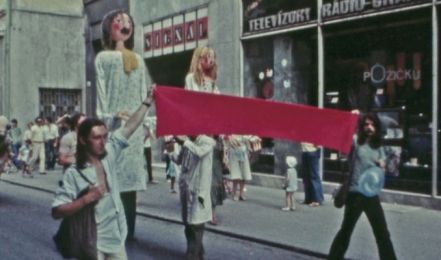
Párhuzamos struktúrák, kommunikációs csatornák és csomópontok
… channels, nodes and vechicles of transfers between the art scenes of the countries of the so-called "Eastern bloc" in the 1970s. Speakers: Andrea Bátorová, Hana Buddeus, Katalin Cseh-Varga, Daniel Grúň, Beáta Hock, Mira Keratová, Lujza Kotočová, Zsuzsa László, Karolina Majewska-Güde, Pavlína Morganová, Jana Písaříková, Dagmar Svatošová For more details visit the project's website.

Linking Art Worlds
Traveling research seminars 2022—2024 - call for application The Leibniz-Institute for the History and Culture of Eastern Europe (GWZO), with joint support from the Terra Foundation for American Art and the Getty Foundation through its Connecting Art Histories initiative, is launching a new series of traveling research seminars to explore relationships between the U.S. and East-Central European art scenes after 1945. Led by Dr. …
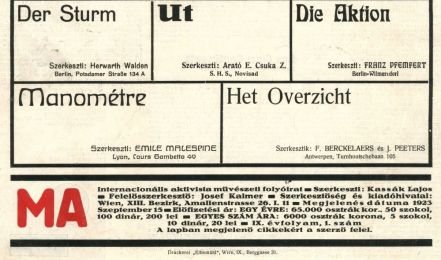
Periodicals beyond Hierarchies
Challenging Geopolitical and Social “Centres” and “Peripheries” through the Press – Call for Papers 10th International ESPRit Conference 10th International ESPRit Conference For the first time in East-Central Europe, the European Society for Periodical Research (ESPRit) convenes its 2022 (10th) international conference in Budapest, Hungary, to focus on the following theme: Periodicals beyond Hierarchies: Challenging Geopolitical and Social “Centres” and “Peripheries” …
TÓTalJOY 2021 Díjátadó / Kaszás Tamás
… the Museum of Fine Arts – Central European Research Institute for Art History (KEMKI) announced a call for research-based art projects for the first time in July this year, to which 27 project proposals were submitted. Endre Tót and the Central European Research Institute for Art History (KEMKI) – Artpool Art Research Center announced a new open call for projects based on artistic research in July this year and received 27 project proposals. The founder and supporter of the prize is the …